
Under the Influence: Metroid and Me Part 1
A look at how Metroid II changed my life.

“Under the Influence” explores aspects of a game or series that influenced my perspective on video games. Specifics regarding establishing timelines when something occurred may occasionally be a bit wibbly-wobbly, timey-wimey in places. It is rather difficult to remember details from 20 or 30 years ago that I didn’t think I’d ever write about until now. So sit back, relax, and enjoy the journey.
Also, subscribe below and never miss out on a single article!
I’ll wager that most of you have read or watched a Metroid retrospective for the umpteenth time already. So I’ll dispense with the Jeremy Parish-esque deep dive into the history of the series and its influence on video games. Instead, I’ll just talk about its impact on me. But first, let me get a bit of housekeeping out of the way.
While the chronologist in me is screaming to start with the first Metroid on the NES, my initial introduction to it was merely a cursory glance. I had no real context to understand what I was looking at. Therefore, it didn’t leave as deep a first impression as the sequel. But I’ll save that tale for part two. Alright, now on to the good stuff.
In the Beginning
My formal introduction to the series began on the Game Boy, when Metroid II: Return of Samus came into my life courtesy of my brother. It was sometime in 1992 when Big Brother told me about this game he borrowed from his friend at the time. I remember him describing Samus Aran as a “cyborg” who worked for the galaxy police. Though I’d later learn he was playing it fast and loose with the description of Samus, he had me at “galaxy police”. The term reminded me of the Enterprise crew in Star Trek: The Next Generation, my entry point into all things sci-fi.
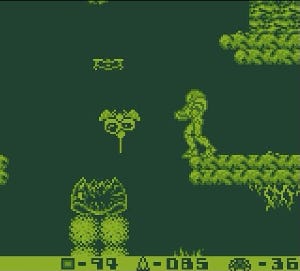
Watching Big Brother play Metroid II marked the first of many backseat gaming sessions—me constantly looking over his shoulder, trying to get a better view of the Game Boy. At times, he would kindly ask me to move to another angle so my shadow didn’t obscure the blurry dot matrix screen.
As is the case with most Metroid games, progress isn’t a straight path from start to finish. There’s a fair amount of backtracking involved through areas connected by a central hub, which eventually leads you to the endgame. In my opinion, the backtracking in Metroid II is far less arduous than in the first game. But I didn’t know that back then.
This was also my first time playing a Game Boy game with multiple save slots. Previously, I thought that was only possible on PC DOS games. So it gave Metroid II an even greater sense of grandeur in my mind. I mean, three whole separate save files? What a time to be alive! It was a remarkable innovation for me because now, Big Brother and I could play at our own pace without interfering with each other’s game.
Now, I don’t know about you, but I was often paranoid that I wouldn’t remember what I was doing once I turned off the game. So every time I used a save station, I’d make sure to point Samus in the direction I wanted to go next when I came back to the game. It helped me to avoid unnecessary backtracking.
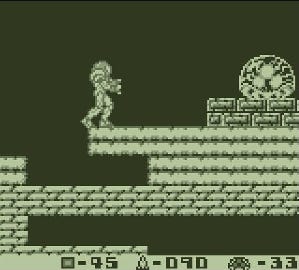
Due to this being our first exposure to the idiosyncrasies of the Metroid series, plus the nuances unique to this particular game, exploring the bowels of SR388 (the planet where the game takes place) felt like a bigger undertaking than it actually is. Much time was spent not knowing where to go or how to get there.
Part of the fun was discovering all the abilities of Samus’ Power Suit. I clearly remember the feelings of accomplishment and empowerment the first time I obtained the Ice Beam, one of the earliest upgrades you’ll find. I loved the novelty of freezing an enemy and either destroying it or using it as a platform to stand on (and then killing it).
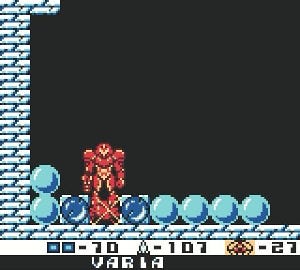
Then came the unforgettable moment when Big Brother showed me how to acquire the Varia Suit. I was mesmerized at the sight of the new armor overlay atop the old Power Suit. Samus now runs faster and is less vulnerable than before. It conveyed the feeling that she was equal to the challenges that lay ahead.
Metroid II was the perfect game for me to hone my platforming skills. I could only get so far in games like Sonic the Hedgehog or Super Mario Bros. 3, with their demands for precise jumps and constant momentum. And let’s not even mention the auto-scrolling stages. Instant panic for me. But in contrast, Metroid II was a slower-paced game and didn’t put you under pressure with a timer. I was free to explore as I pleased, and it was a nice change of pace from what I was accustomed to previously.
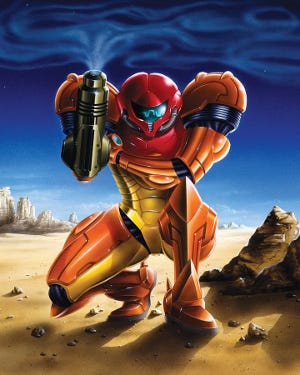
Between gameplay sessions, I’d pore over the cover art. I loved that image of a fully armored Samus striking that fierce kneeling pose with the smoke rising from her arm cannon, as if she had just blasted an ill-fated foe to kingdom come. The attention to detail on her segmented Varia Suit and oxygen apparatus visually communicated the internal logic of how she could have the freedom of movement to somersault across platforms or breathe in space. It all made sense to me at a glance.
In the Hunt
Similar to the plot in the movie Aliens, the main objective is to find the hostile Metroids and eradicate them one by one. Seemed simple enough at first. But playing without an instruction manual, Big Brother and I didn’t know that there were different varieties of Metroids as you progress further in the game.
We were in for quite a shock when we unexpectedly ran into the first Gamma Metroid (with that jerky “growing” animation, heightening the scare for us), which are nearly double the size of the ones we had seen up to that point. And they only got nastier from there. At some point, the Metroids eventually evolve into Xenomorph lookalikes that Samus can’t outrun, and it takes many more missiles to subdue them than their less evolved brethren.
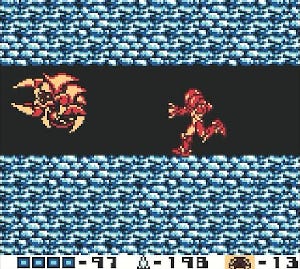
With the exception of the main hub area and the ruins, Metroid II is devoid of non-stop actiony music. Most areas feature subdued, ambient tones that sound similar to insect trills on a quiet night. It effectively instills both a sense of isolation and slight trepidation that something sinister could be nearby.
That quiet undertone is abruptly juxtaposed by the frantic music that kicks in when you come face-to-face with a Metroid. It made for some effective jump scares for newbies like Big Brother and me, especially when a confrontation was triggered after transitioning between screen boundaries. See case in point below1.
One encounter I’ll never forget happens while descending a seemingly innocuous shaft, only to have that Metroid music break the silence, and up comes a Gamma Metroid resting just under the platform you landed on. Scared us half to death. It got to the point where, if a corridor seemed eerily devoid of enemies, we’d gently move Samus forward instead of casually running, for fear that a Metroid would get the drop on us.
With such danger ever-present, the brief fanfare accompanying each acquisition of a new upgrade, missile pod, or energy tank gave me a few seconds of comforting reprieve before heading back out to face the unknown. Like a comforting pat on the shoulder that said, “keep going, kid”.
Ooh, It’s a Lady!
Obviously, Samus’ gender is no secret these days. But it took Big Brother and me quite a bit of time before we learned about it for ourselves. For starters, since the game was borrowed, he had to return it eventually. And second, about a year or so had passed before he got his own copy. Between the two of us, we completed the game at least twice. The credits roll, Samus either runs endlessly against a starry background or jumps and sticks the landing with the Varia Suit still on, and that was it.
And then one day, it happened. At this point, it was probably my second or third time completing the game. Big Brother is elsewhere in the house. Credits roll. “The End” appears. Samus jumps, but this time lands without the armor on, revealing what I thought was a cyborg to be a woman.
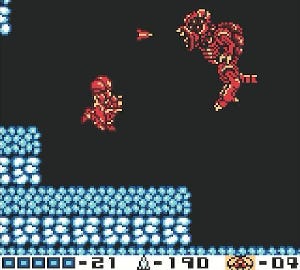
At that moment, a great sense of pride swept over me. Not only did I have the joy of discovering the best ending all on my own, but I loved the idea that this whole time, it was a lady who was getting it done. Forget saving a love interest. Homegirl was saving the whole dang galaxy. It was an absolute revelation in every sense of the word.
Old Dog, New Trick
I love it when I can manage to still find something new in a game I’ve been playing for years. Such was the case about 10 years ago when I reached the final showdown with the Metroid queen for the umpteenth time. Usually, I’d just sink as many missiles into it as possible while avoiding her snapping maw. But on this occasion, while attempting to kneel down and fire missiles, I accidentally went into Morph Ball mode instead. The feeling of annoyance at my error turned into shock and awe at seeing the Metroid queen consume the Morph Ball and digest it.
As the sound of Samus’ draining energy went haywire, I desperately planted bombs inside the foul creature. After it spat me out, I kept repeating the same strategy just to see if it was possible to beat the game that way. Not only was it possible, but defeating the final boss this way only took a fraction of the time it takes to fight her the less risky way. It was amazing. Just when I thought I’d seen everything Metroid II had to offer, it left me that final parting gift. I’m reminded of the moment in Iron Man 2 when Tony Stark solved a problem thanks to a message from his deceased father: “Dead for almost 20 years, and still taking me to school”.
The Influence
Metroid II learned from the pitfalls of its predecessor. Instead of starting half-cocked, Samus begins with a full energy tank, a consignment of missiles, and the Morph Ball to get you on your way. Between the acid liquid boundaries and the Metroid counter on the pause screen, the game gave me sufficient contextual waypoints that eventually helped me figure out where to go without the need for a map.
Instead of feeling lost, I was just a bit turned around, but would surely find my way eventually. That dynamic stuck with me and turned me into a lifelong fan of the Metroid series, which Super Metroid would solidify several years later. But that’s another story for another time.
On a more personal note, playing Metroid II along with Big Brother is one of my most cherished memories. The game always reminds me of what I liked best about growing up with him. Despite the 8-year age difference between us and there being only one Game Boy in the house (which belonged to him), he was generous enough to let me play it when he was away doing firstborn-sibling stuff.
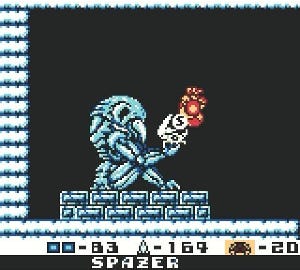
When watching him play, he would follow my suggestions as we both tried to figure out how to reach the next area. When I discovered the best ending and later showed it to him, he didn’t get upset that I beat him to it. Instead, he was just as happy for my accomplishment as if he had done it himself.
In retrospect, that time spent with my brother taught me the value of collaboration over competition, camaraderie over contention. It’s the reason I never got gatekeepy about video games. Instead, I love helping someone get past a difficult section or give a quick suggestion (when solicited) that gets a newcomer on their way in a game, then let them enjoy the rest on their own. I want them to feel welcome and know that they belong regardless of their knowledge, skill, or lack thereof. That’s what playing alongside my brother did for me. And in my book, that makes Metroid II more than the sum of its parts.
Thanks for dropping by and sharing your time with me. If you enjoyed yourself, go ahead and subscribe to my newsletter. It’s free for your reading pleasure. If you would like to support The 8-Bit Perspective with your dollar bucks, you can buy me a coffee and help me keep the lights on, one sip at a time.
All screenshots and video clips were captured on my Switch via Nintendo Switch Online.
Super Metroid is as far back as I went, but now I feel surprised by Metroid II. I had no idea you could pull a similar trick to that boss like in SM, it shows how forward thinking Nintendo was in a far less powerful platform. I may have to try it on NSO.
It was great to hear your memories and how you bonded with your brother.
Metroid 2 is one of the most important games to me personally, mostly because it was the first game I ever beat entirely by myself with no help. That credits sequence and song is probably the most triumphant thing in the universe.
It's even more incredible to me, looking back, how much better it was in every way from the original, and not through technical improvements [obviously] but pure game design. Every room, for one thing, is unique, and identifiable, even the ones that are most similar to the sprawling vertical shafts or hallways of the first game, and there's enough detail despite the memory limitations to really create believable, or more to the point, coherent contextual environments, which by itself makes navigation, the hardest thing to get right in a Metroidvania, much easier.
But I think the most underrated thing Metroid II has going for it, over the whole rest of the series, is that soundtrack. The fact that so much of it is mostly quiet ambient tracks, a desolate alien world with the chittering and chirping of unseen things, bringing the excellent sound effects to the fore, is one of the things that really sold the setting to me as a kid, and something I wish the newer games, in spite of their excellent music, would lean into.
And it all comes together in that moment you describe, when you realize you're in a place on a barren planet that's TOO barren, TOO quiet, TOO empty and still, and swap to your missile launcher less with a conscious thought and more on instinct. That level of environmental awareness is shockingly rare in games, which is a shame, because games are a format uniquely situated for giving you those 'hairs on the back of your neck standing up' sensations.